Reimagining Entertainment at Sea: Designing Icon of the Seas
Designing world-class entertainment spaces on a cruise ship is no small feat. For Royal Caribbean’s Icon of the Seas, we were tasked with transforming conventional cruise venues into dynamic, flexible, and spectacular environments—spaces that could host Broadway-style productions, water and ice shows, and immersive nightlife experiences, all while navigating the unique challenges of a floating city.
“What made this project remarkable,” reflects Liz Blessing, “is that we took an industry that’s hyper-conservative and convinced them to rethink ship design that had been static for the past 50 years.”
Our role was not just about aesthetics; it was about enabling creative possibilities. Each venue required careful planning to accommodate the technical demands of live performance, audience flow, and operational logistics. The result is a ship that is a new benchmark for entertainment at sea.
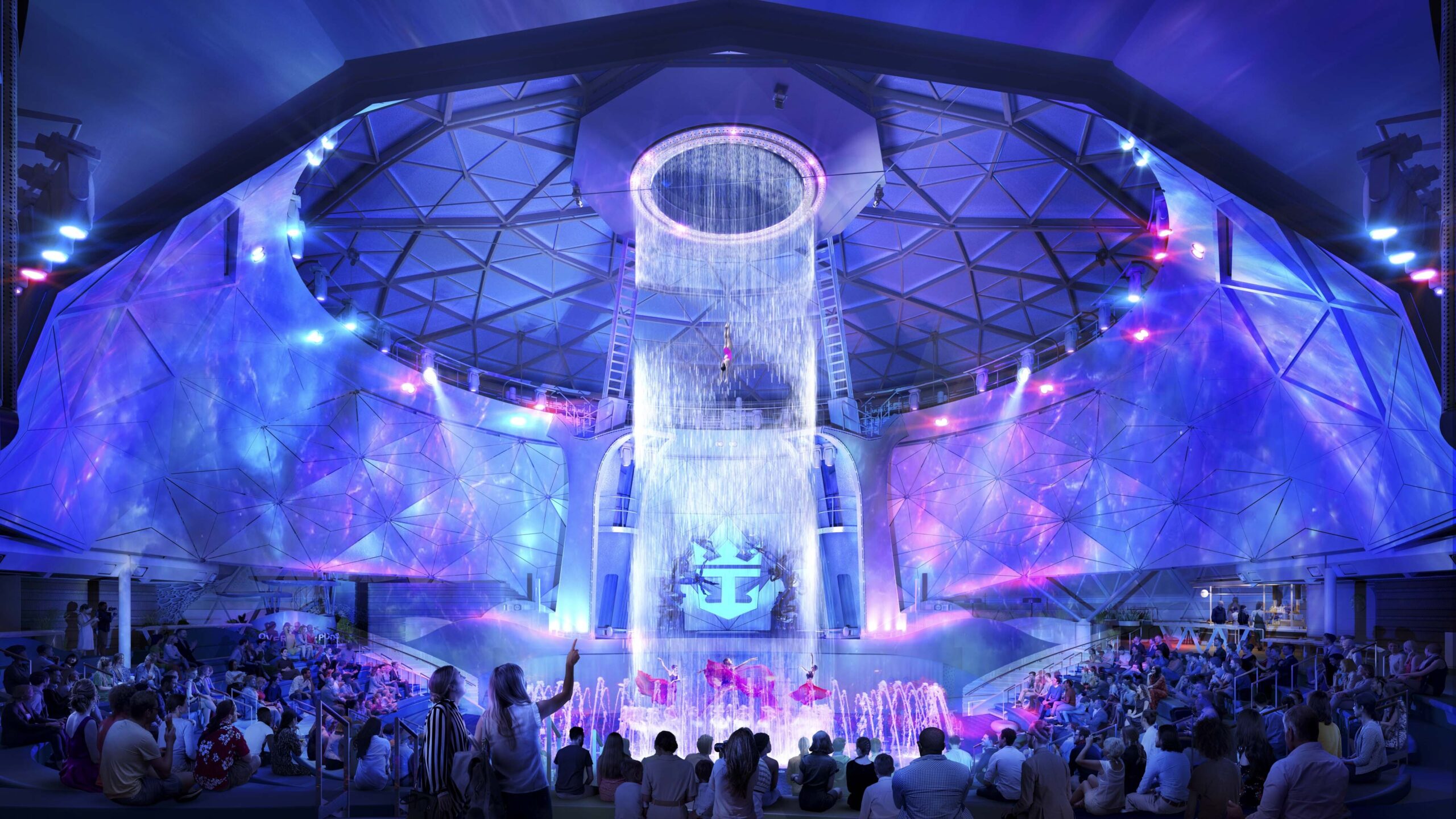
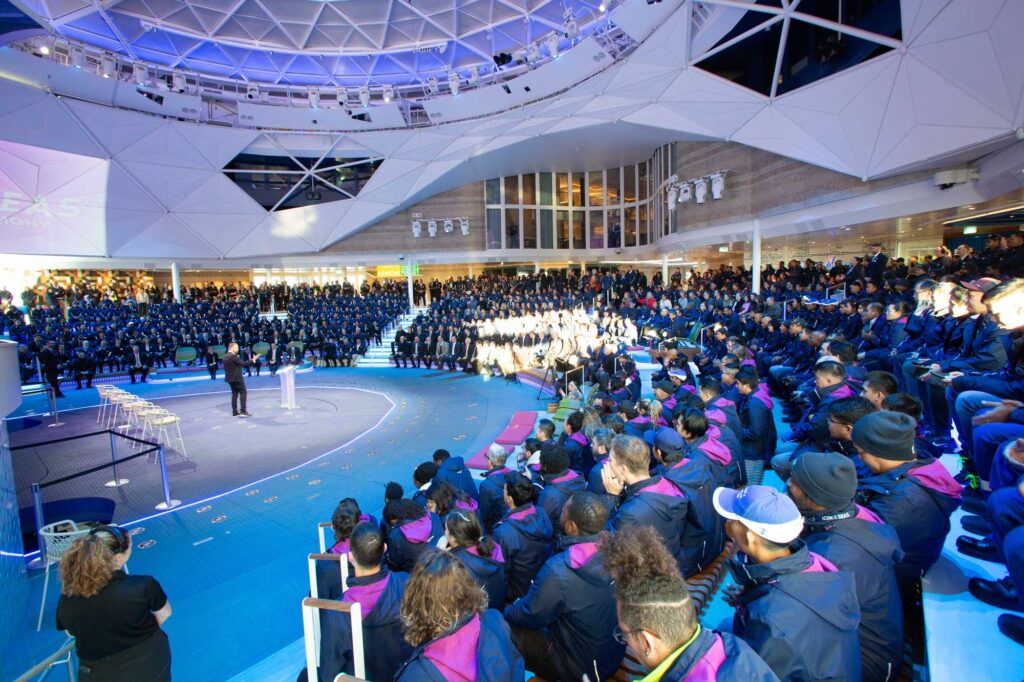
Aquadome Theatre Courtesy of RCCL
Pushing the Boundaries of Design
The Icon of the Seas features five primary entertainment venues: the main theatre, AquaDome, Absolute Zero ice rink, a concert hall/nightclub, and a variety of secondary performance spaces including a jazz club, comedy club, and the Supper Club. Each was designed to be flexible, engaging, and technically robust.
Jon Sivell explains, “They basically asked us to reimagine the entertainment spaces on board in a way that pushed them to be much more adaptable than they had previously. The main theatre, for example, was designed with a reconfigurable front edge, enabling more varied productions than ever before.”
The AquaDome, a water-based aerial theatre located at the top-front of the ship, presented unique structural and technical challenges. “The ship is the part that moves the most in wave action,” Jon continues. “We had to collaborate closely with engineers and architects to ensure the space could safely and spectacularly host water performances.”
Meanwhile, the Absolute Zero ice rink was relocated and expanded, increasing deck height by two levels—an almost unheard-of modification in cruise ship design. Liz recalls, “It’s impossible in most cruise ships to gain more deck height, and yet we made it happen. We created a space that allows for world-class ice shows and complex stunts that weren’t possible before.”
Designing for Flexibility and Spectacle
Beyond technical feats, our team focused on the versatility of each space. The main theatre, AquaDome, and Absolute Zero were designed to host a wide range of productions—from touring Broadway shows to self-produced spectacles. Secondary venues, including piano bars, comedy clubs, and intimate nightclubs, were carefully integrated into the ship’s neighbourhoods, balancing guest experience with performance logistics.
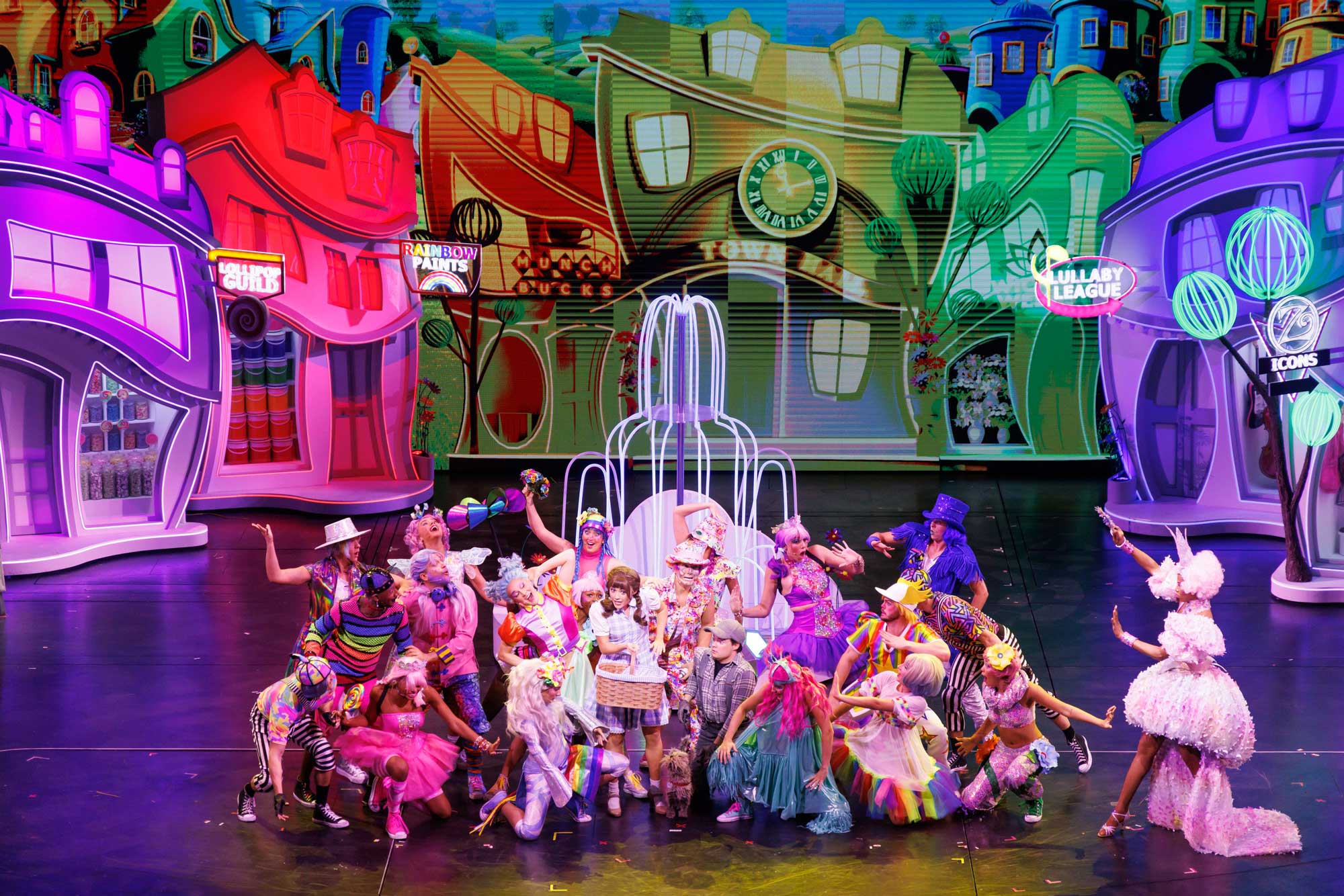
Liz emphasizes, “One of the initial challenges was enabling productions like Hamilton or Hairspray to transfer onto the ship. The technical limitations of previous designs had made it nearly impossible, but we upgraded systems and rethought spaces to make it feasible.”
Every decision was made with the guest experience in mind. From sightlines in the main theatre to the placement of performers in the promenade and neighbourhoods, the ship’s design ensures that every performance is immersive and accessible. Even small details, like integrating performance flow into the central promenade, highlight our holistic approach to design.
Collaboration Across Disciplines
This project was a testament to collaborative design. Working closely with Wilson Butler Architects, Rockwell Interiors, Meyer Turfers at the shipyard, and specialist interior designers, our team ensured that live entertainment was fully integrated across all aspects of the ship.
Jon notes, “We were involved in basically every space that had live entertainment. That level of integration meant we could create cohesive experiences that worked for both performers and passengers.”
Liz adds, “It wasn’t just about the venues themselves. We helped the ship rethink how entertainment could flow, how spaces could be reconfigured, and how multiple performances could coexist without conflict. That’s where our design expertise really shines.”
Impact and Innovation
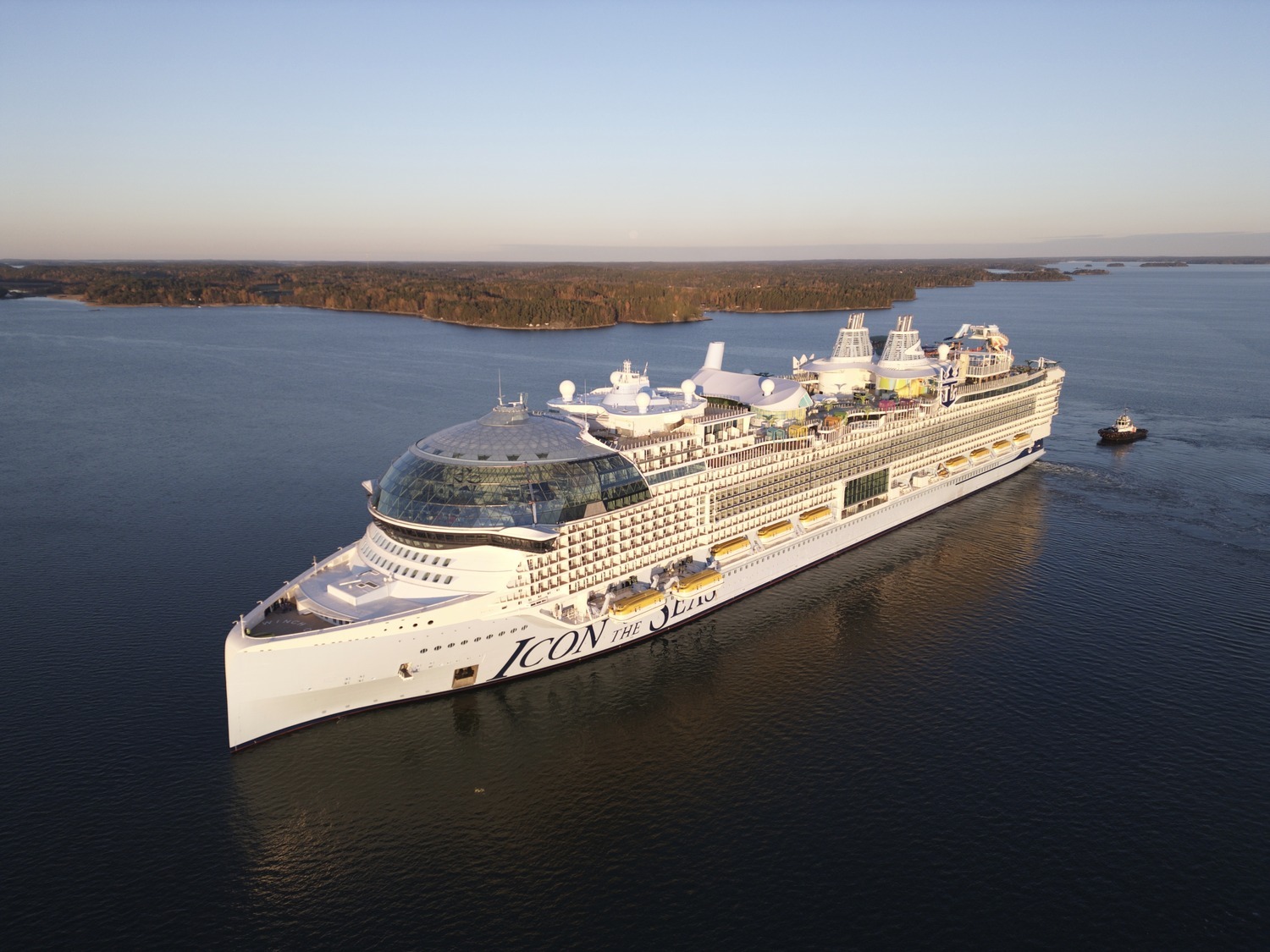
The impact of these design decisions is profound. By enabling larger, more flexible performance spaces, Icon of the Seas can host productions that rival terrestrial theatres. The ship now features one-of-a-kind venues, including the AquaDome and Absolute Zero ice rink, that push the boundaries of what’s possible at sea.
“What’s incredible is that we managed to make these things possible,” Liz reflects. “The ship is now a platform for innovation in entertainment, setting a new standard for the cruise industry.”
From concept to completion, the project demonstrates the power of design to transform expectations. It’s not just about creating beautiful spaces—it’s about making ambitious ideas work in real-world, technically demanding environments.
Conclusion
Icon of the Seas showcases our ability to deliver extraordinary results in complex, high-stakes projects. By reimagining traditional cruise entertainment, we have created a ship that is more than just a vessel—it’s a stage, a theatre, and a catalyst for unforgettable experiences.
As Jon concludes, “This project proves that thoughtful, integrated design can turn ambitious visions into reality. We’ve redefined what’s possible at sea, and our fingerprints are on every performance, every venue, every guest experience.”