Working in Harmony: The Acoustics of Mass Timber Performance Spaces
A conversation with Eric Magloire, Design Principal and Senior Acoustician at Charcoalblue
As the architecture world embraces more sustainable materials, mass timber has become one of the most compelling alternatives to concrete and steel, celebrated for its natural beauty, warmth, strength, and lower carbon footprint. Increasingly, it’s being used in cultural and performance spaces where the material’s acoustic and aesthetic properties are both paramount and deeply intertwined.
At Charcoalblue, Eric Magloire has spent over seven years exploring the acoustic potential of this material through projects such as the American Repertory Theater (A.R.T.) at Harvard University and the Doris Duke Theatre at Jacob’s Pillow Dance Festival in Becket, Massachusetts. In this conversation, he shares what makes mass timber so exciting, and what it takes to make it perform at the highest acoustic level.
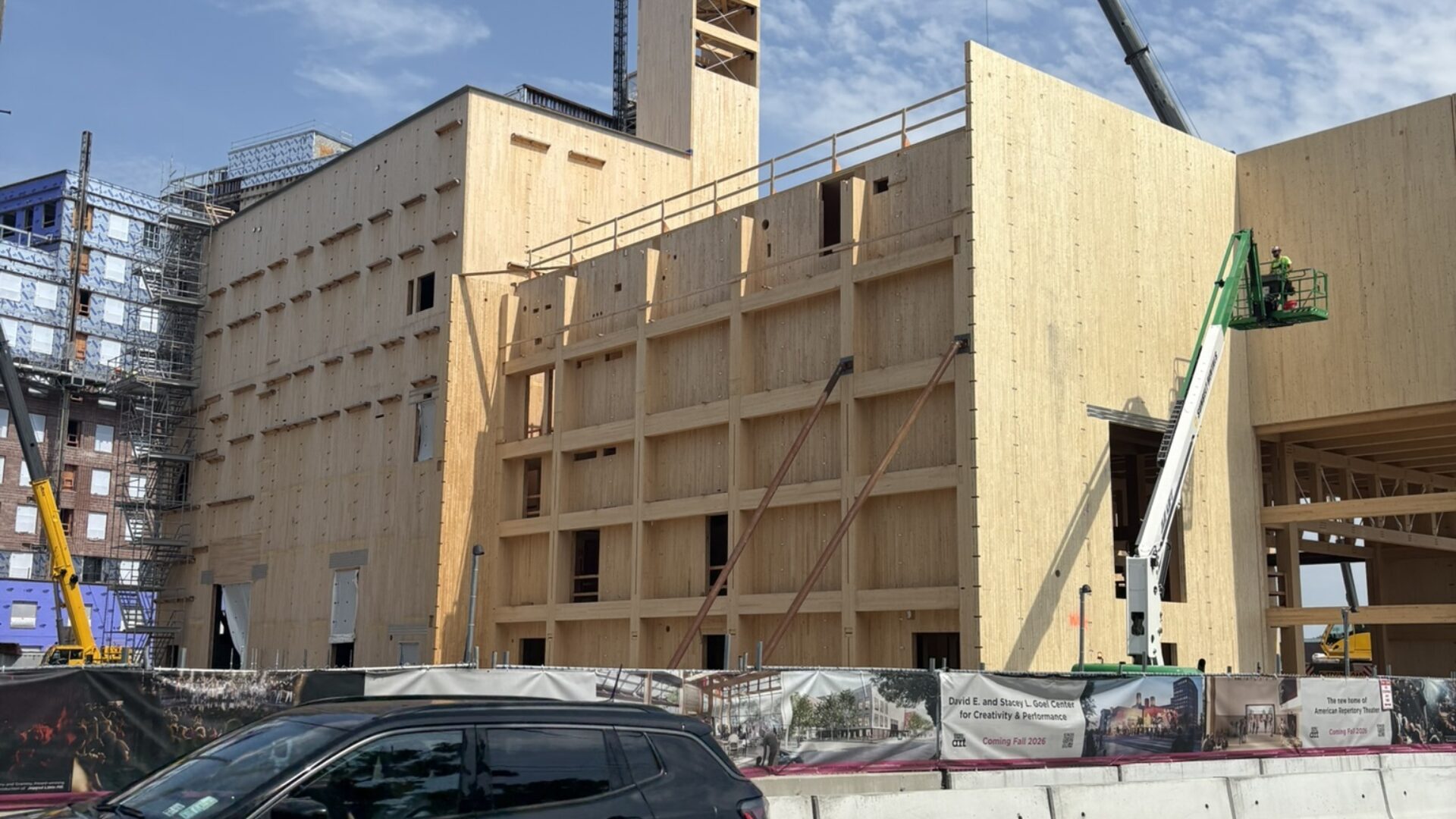
“Mass timber offers both a visual warmth and a structural honesty that aligns beautifully with cultural buildings,” says Eric. “What excites me most is the challenge of preserving its exposed character and maximising its sustainable benefits while still achieving world-class acoustics – goals that aren’t always easy to align.”
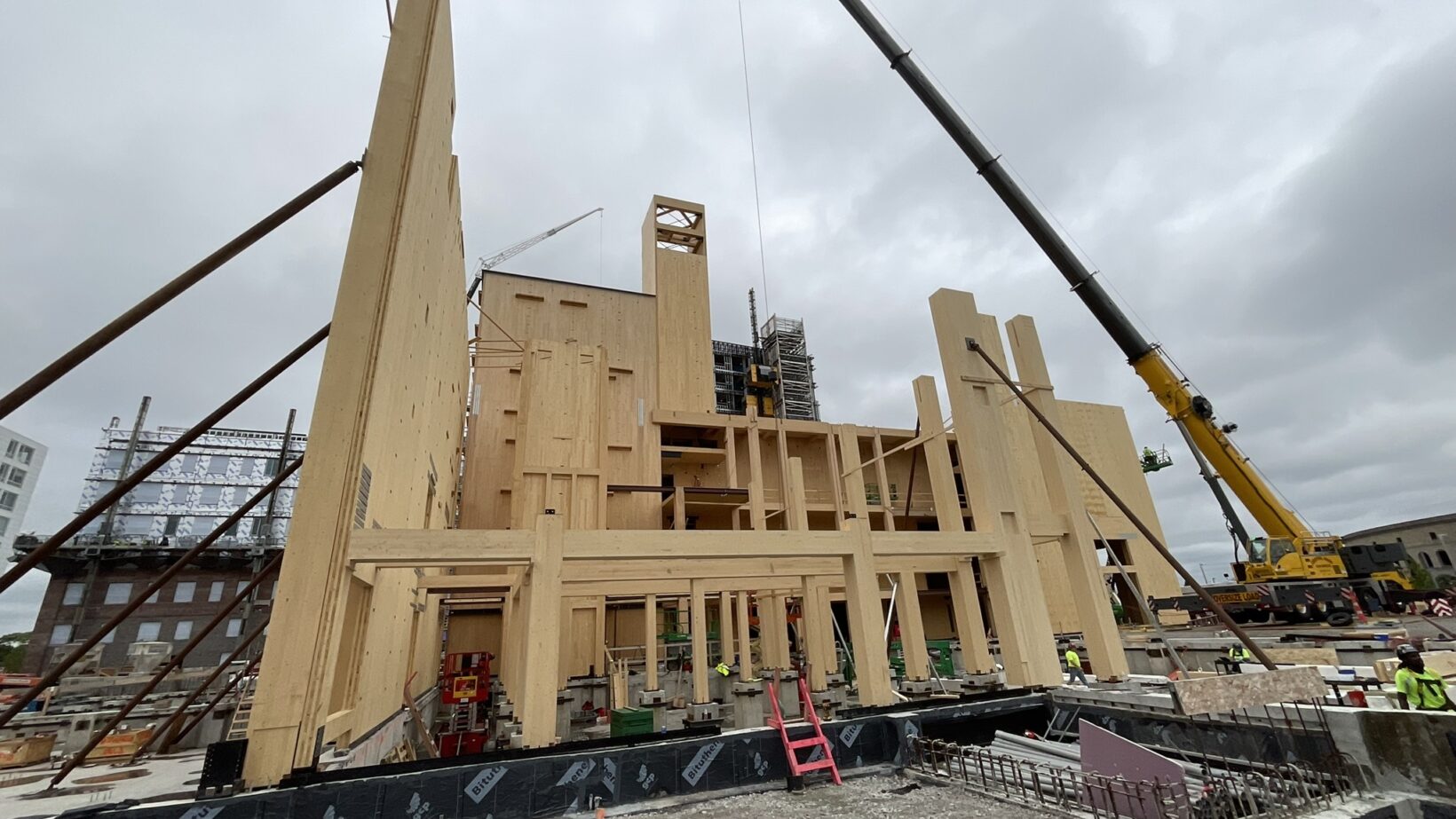
The Acoustic Character of Timber
Unlike dense materials like concrete or steel, mass timber’s lightweight composition means it transmits low-frequency sound more easily, demanding careful sound isolation measures and detailing to maintain sound separation between spaces.
“A big misconception is that mass timber naturally has good sound isolation properties,” Eric notes. “In reality, it’s a very lightweight material, so we have to work harder to control flanking and sound transmission.”
Every mass timber type—cross-laminated (CLT), nail-laminated (NLT), and dowel-laminated (DLT)—each being constructed differently, demands its own approach. CLT panels provide slightly greater sound isolation, while NLT and DLT add texture but may allow sound to leak if unsealed.
“Some assume timber isn’t suitable for performance spaces at all,” Eric adds. “We disagree—it just requires a different mindset. We use buffer zones, rethink adjacencies, and even consider how spaces stack vertically to optimise performance.”
He emphasises the domino effect of sound isolation across the building:
“Each mass timber build is completely bespoke, so you have to think very creatively about the space as a whole – even the stiffness of timber floors affects how vibration isolators perform and how impact sounds, like dancing, travel through the structure.”
With the right design approach, mass timber construction can deliver exceptional acoustic performance while offering uncompromising architectural beauty.”
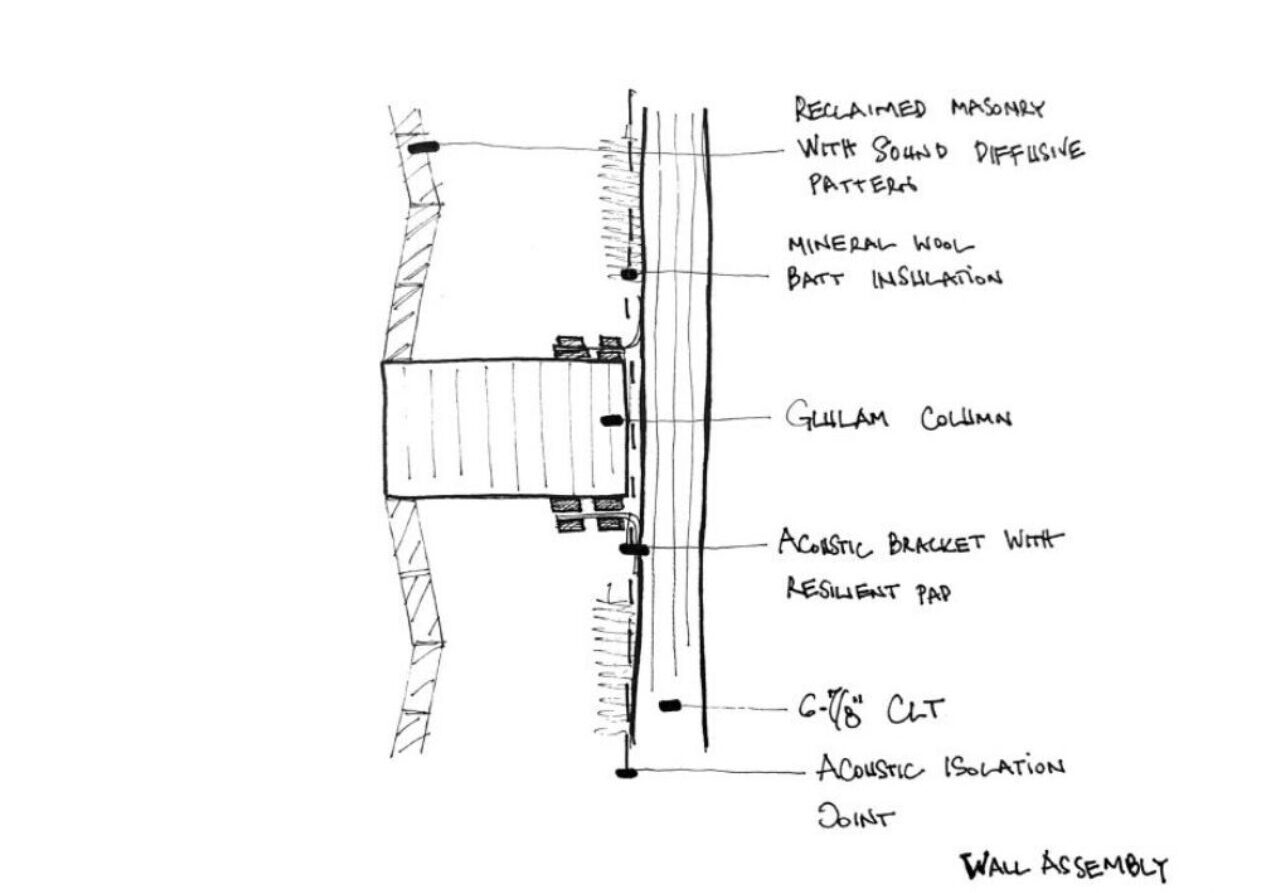
Eric often uses sketches and diagrams to communicate complex ideas: “I’ve worked across several continents, sometimes where English isn’t the first language, and drawings often communicate more clearly than words.”
Early Integration, Lasting Impact
The key to success with mass timber starts with early collaboration between acousticians, architects, and engineers, and obviously clients.
“The earliest stages of design afford the greatest opportunity to avoid problems later,” Eric explains. “With good planning, you can achieve the required sound separation more efficiently and more cost-effectively.”
At A.R.T. success depended on early collaboration, holistic acoustic planning, and precise detailing. These strategies allowed the team to design a complete acoustic isolation joint separating the main theatre from foundation to roof, ensuring performances remain undisturbed by adjacent spaces.
At Jacob’s Pillow, mass timber’s sustainability benefits were matched by the efficiencies it brought to a construction schedule that had to work around the rugged weather of the Berkshire mountains. In addition to reducing the building’s carbon footprint, the mass timber structure went up in just six weeks, a great combination of speed, beauty and performance.
Closing Thought: A Continued Commitment to Innovation
Eric’s curiosity about mass timber goes far beyond the drawing board. He visited the town in rural Quebec from whose surrounding forests the timber for these two project were sourced, and toured the mill, watching as the logs were laser-cut and prepared for fabrication.
“Seeing how the material is made gave me a deeper understanding of how it behaves,” he says. “It’s still a relatively new construction material compared to concrete or steel, so there’s always more to learn.”
That hands-on approach reflects Charcoalblue’s wider philosophy: that deep understanding leads to better design.
“Detailing and coordination are everything,” Eric reflects. “When architects, engineers, and acousticians collaborate early, we can make timber sing — both literally and figuratively.”
Achieving world-class performance in mass timber construction is a delicate balance of science and art. Both A.R.T. and Jacob’s Pillow demonstrate how this approach pays off: superb examples of mass timber’s potential when technical precision meets design integrity.
“It’s a beautiful piece of construction, and a great example of how performance and sustainability can coexist,” says Eric.

Eric visiting the mill where the timber logs were cut and prepared for fabrication.
About Eric Magloire
Eric promotes design excellence, encouraging innovation and collaboration across all disciplines of theatre consultancy and acoustics.
Learn More