Joe Schermoly
Senior Consultant

Joe joined Charcoalblue after spending ten years designing and building sets in theatres of all sizes across Chicago and in London.
My work at Charcoalblue spans team leading, theatre design and stage engineering. I love the opportunity to collaborate with clients and architects to provide the most graceful solution for any design challenge. Focusing on the people in the space, including all members of the audience, artistic teams, and technical staff, I aim for every building we work on to carry our ethos of human-centered design. The opportunity to be a part of crafting spaces where people gather, exchange stories, and generate ideas is a privilege and a responsibility. I strive to ensure our work today is successful at fostering connection between people for years to come by making them the most welcoming, comfortable, and capable spaces they can be.
What You Hope People Feel in a Space You’ve Worked On
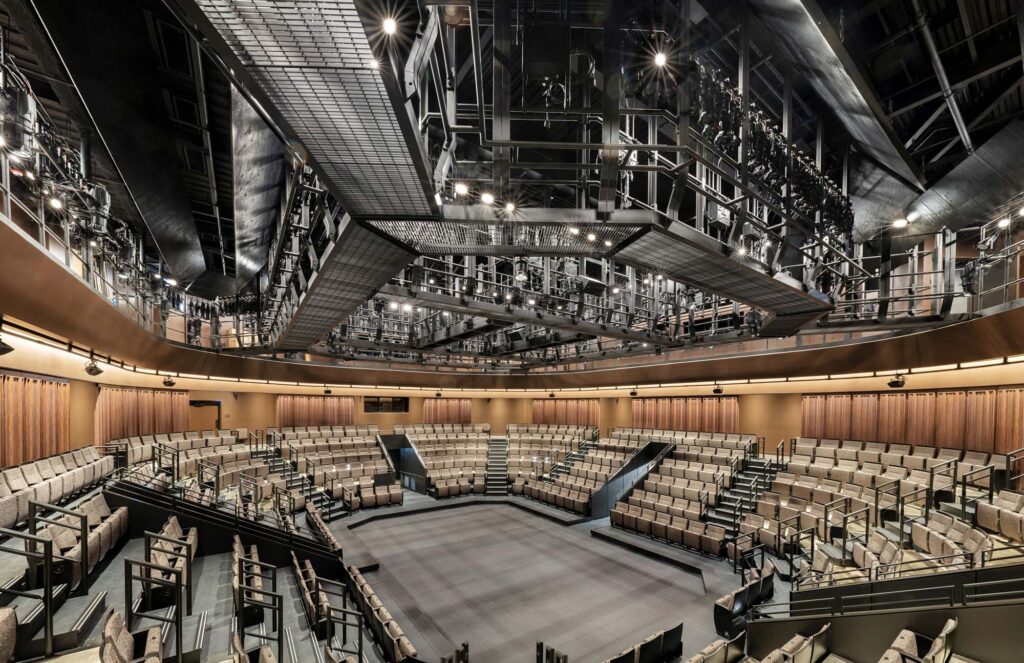
I hope anyone who experiences a Charcoalblue venue will feel as though the space was designed for exactly the purpose it fills. We do not design generic venues for anonymous users. We listen closely to our clients about the programming that their performers, artists, and staff create together, the experience that they want to offer to their audiences, and the needs of their organization to manage their operations. Our venues offer enormous opportunity for those that use them, but always centered around the core goals of the institution that is driving the project to fruition. I hope technical staff feel that we have deep understanding of their work and have provided them with efficient and accessible spaces to perform their tasks. I want artists to feel at home in our venues, enabling confidence to focus on their process, knowing that the room will provide the connection to audiences they need through the room geometry and acoustics we have have designed. Audiences should feel welcome and comfortable in our spaces, while having their focus drawn to the performance at hand without distraction. We look at the space from the point of view of every single person that passes through the doors, and I hope that they all feel that we have heard their needs while we toiled on our designs and have done everything we can to provide for them.
What Are You Learning About Right Now
I have been training bonsai trees for about 8 years now. That’s really just the very beginning of learning about how this very ancient form is practiced. Training small trees in small pots is a path of frequent failure like many other art forms. Trees die or grow out of hand in ways you can’t sculpt back into a shape that you had intended. But the long-view partnership that one must build between your ideas and the tree to achieve something healthy, alive, and beautiful is a fascinating art that I have gained much enjoyment from. It’s a mostly solitary craft that provides quiet meditative hours, but also requires constant maintenance and care for living things like having a pet (or about 25 in my case). I still haven’t trained anything truly beautiful but each year I learn more and more about how to manipulate the living energy of the trees in new ways to form the sculptural vision that I hope we can make together.
Cultural Value That Guides Engagement with Others
The work we do requires an enormous amount of listening, interpreting and responding at all stages. This collaborative communication in which we strive to hear the core values and goals of a client, and translate them into a vision of how people might gather together in community within a physical space is really thrilling. We collaborate with our clients and architects through deep listening, and our aim is to work closely with those partners to ideate and iterate until we find the most excellent balance of their priorities in our designs. The best ideas are always generated in conversation when a range of viewpoints come together to build on each other’s perspectives. Not all the best theatre designs come directly from the theatre designer, and it is imperative that we approach our work with the humility to listen to all the voices in the room. When we can develop concepts together in a way that no one knows exactly who added what to the puzzle, then we know that we are working with trust and respect, and that is how great things happen. Not every project can feel like that, but if we can approach every meeting as an opportunity to bring that attitude on design process to a team, then we can help move the needle within a group dynamic toward better communication and collaboration.