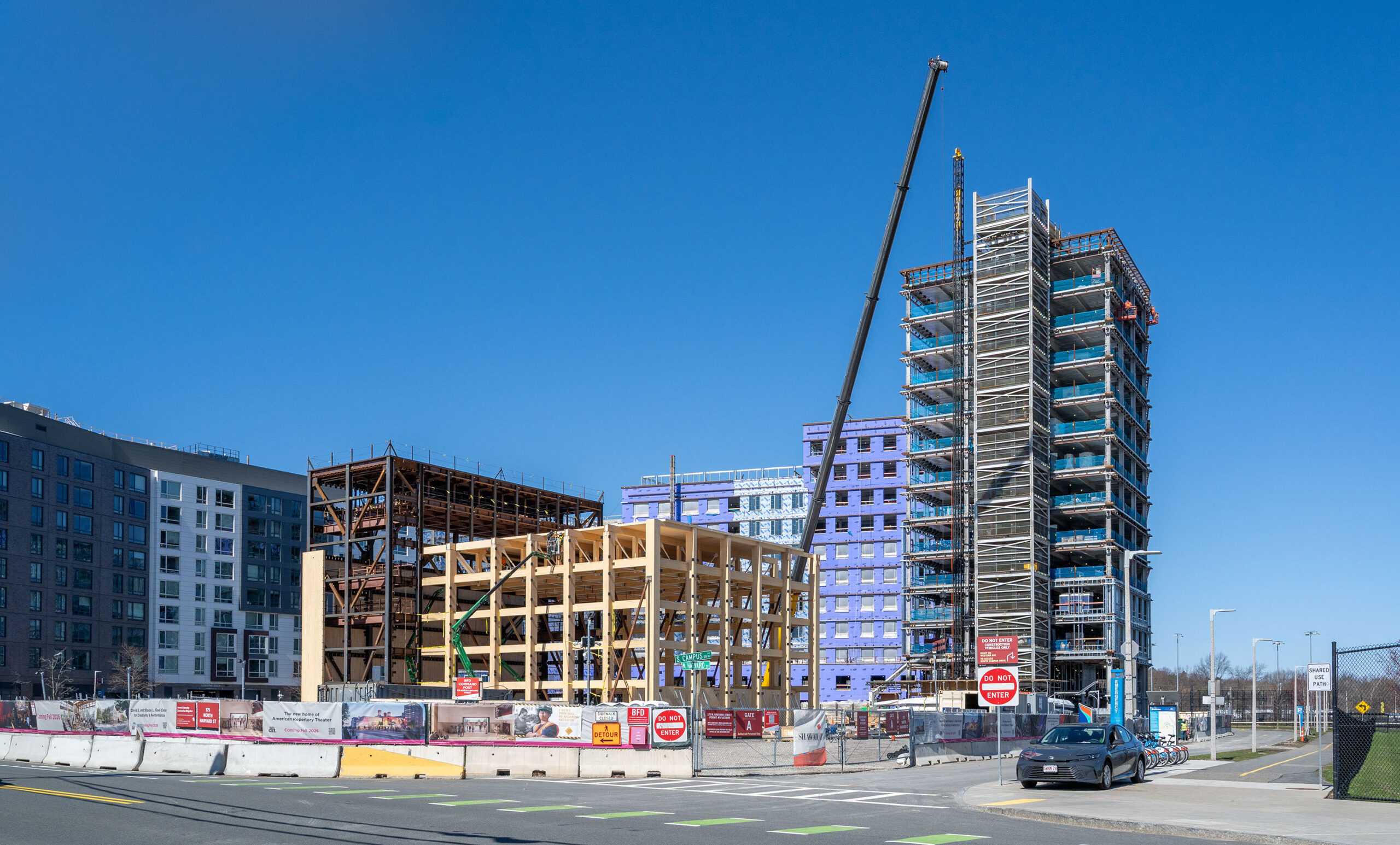
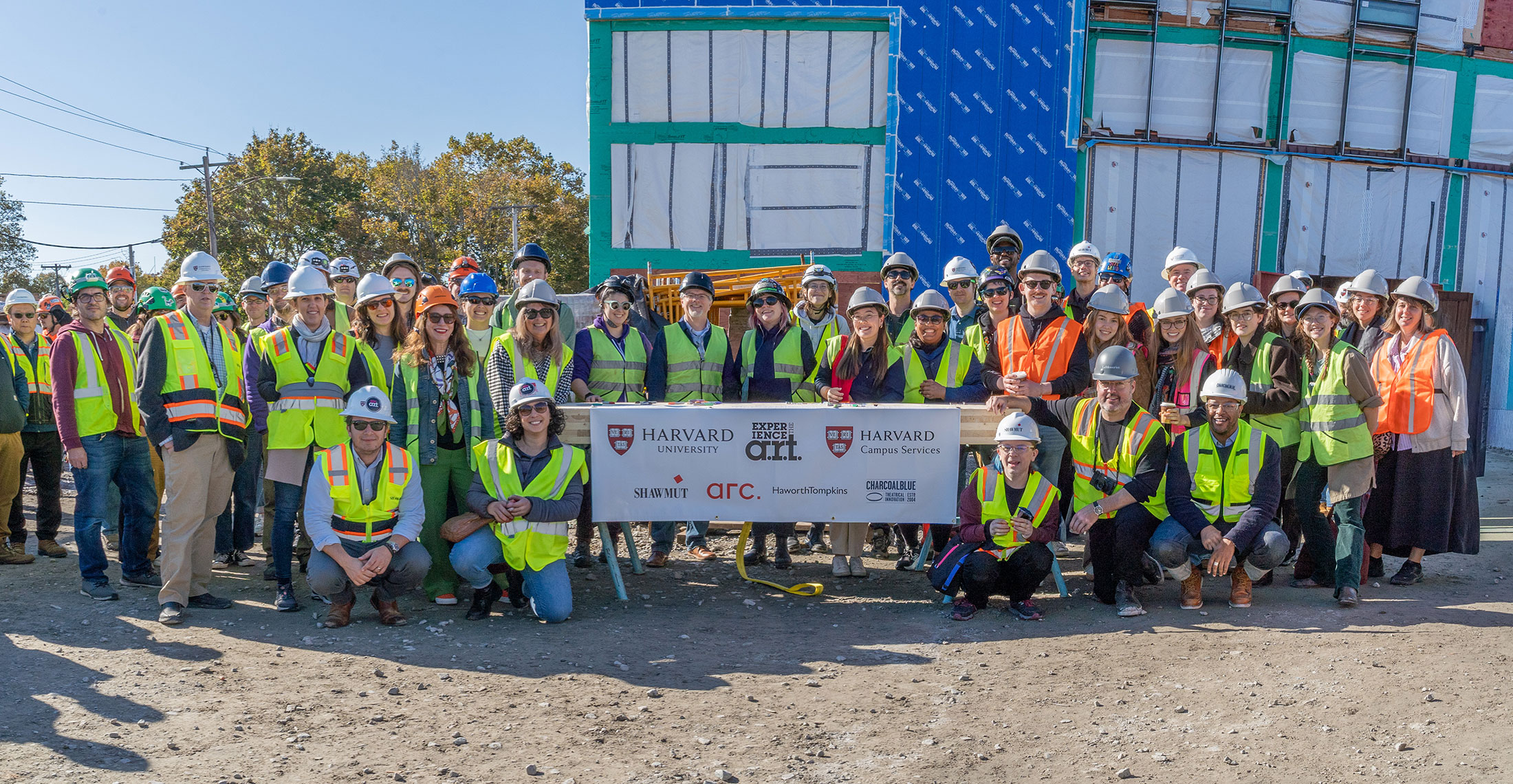
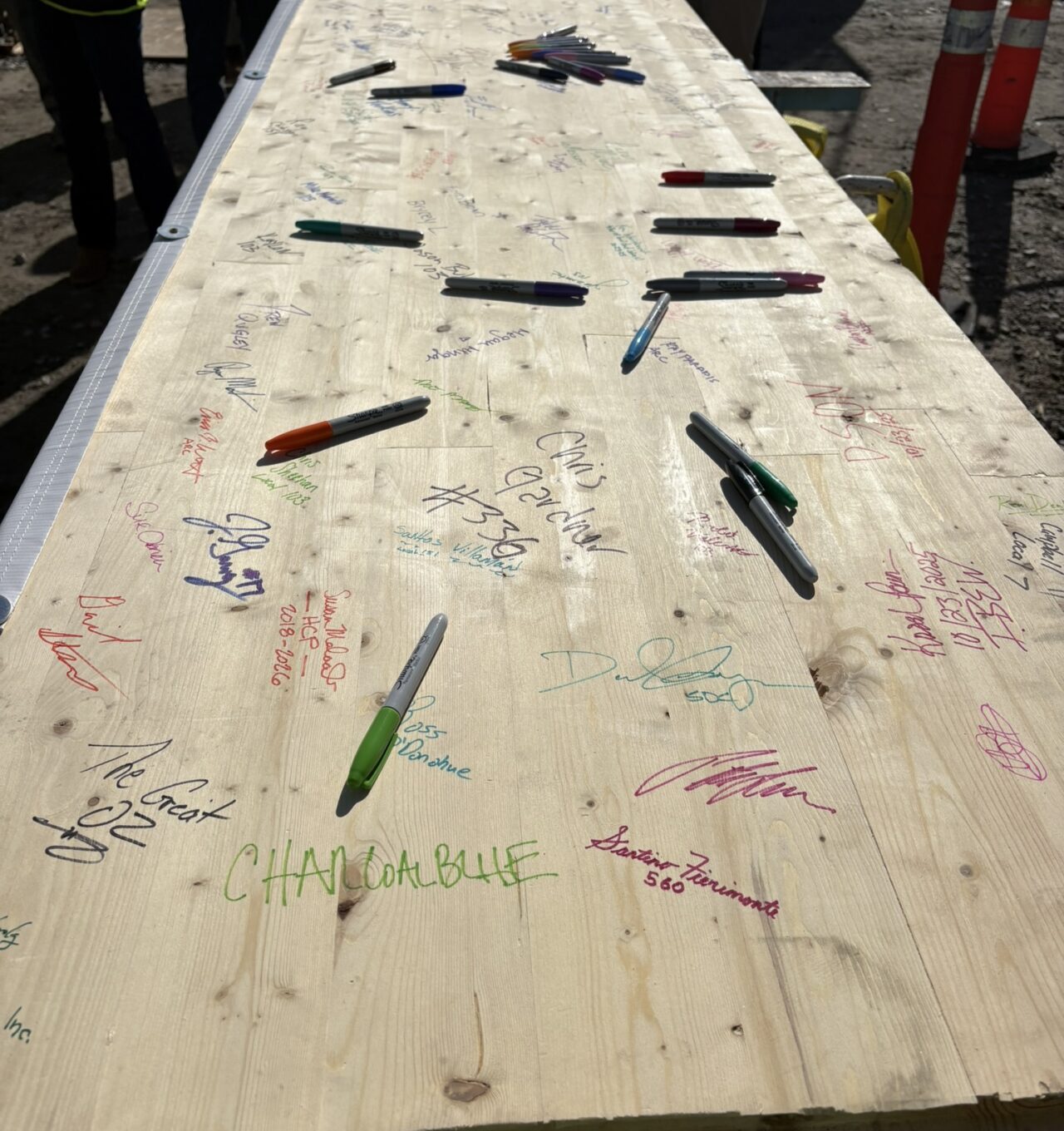
American Repertory Theater (A.R.T.) at Harvard University, along with Harvard Capital Projects, Shawmut Design and Construction, Haworth Tompkins, ARC/Architectural Resources Cambridge, and Charcoalblue, marked a major construction milestone with the ceremonial topping off of the David E. and Stacey L. Goel Center for Creativity & Performance.
Located at 175 North Harvard Street in the Allston neighborhood of Boston, the new home for the A.R.T. was designed to foster groundbreaking performance, public gathering, teaching, and international research. The Goel Center for Creativity & Performance is designed by Haworth Tompkins (architect and design lead) and ARC/Architectural Resources Cambridge (architect of record), in collaboration with theater and acoustic consultant Charcoalblue. Shawmut Design and Construction serves as the project’s construction manager.
“Setting the final piece of the mass timber structure of this fabulous and environmentally sustainable performance center in place is a real milestone. It’s a testament to the perseverance of Harvard University, American Repertory Theater, and our partners on the design and construction teams that so many challenges have been successfully met on the path to this moment and will continue to be met as we work to open the doors in the coming year.”
Kathryn Nolan, Managing Director & Partner
Conceived through core principles of openness, artistic flexibility, collaboration, sustainability, and regenerative design, the Goel Center will provide interconnected, adaptable, multi-use spaces that support creativity and embrace future change. It will include two flexible performance venues—one seating 700 where large-scale productions will be produced, and a versatile and intimate 300-seat black box—as well as light-filled rehearsal studios and teaching spaces, a spacious public lobby, a modest café, and an outdoor performance yard to host ticketed and free programming. The building will also include dressing rooms, technical shops, and administrative offices.
A blend of peer review and scientific contributions from across Harvard University informed a rigorous design process. Members of The Harvard Healthy Buildings Academy, the Harvard Office for Sustainability, the Harvard T. H. Chan School of Health, the Arnold Arboretum, and the Harvard Graduate School of Design each contributed to the project.
The center advances Harvard’s ambitious sustainability priorities and is designed with a blend of environmental and social strategies to minimize embodied and operational carbon, maximize wellbeing, boost biodiversity, and enhance resiliency. This holistic approach to sustainable and regenerative design sets up the Goel Center to achieve Living Building Challenge Core accreditation from the International Living Future Institute, recognizing that it gives more to its environment than it takes.

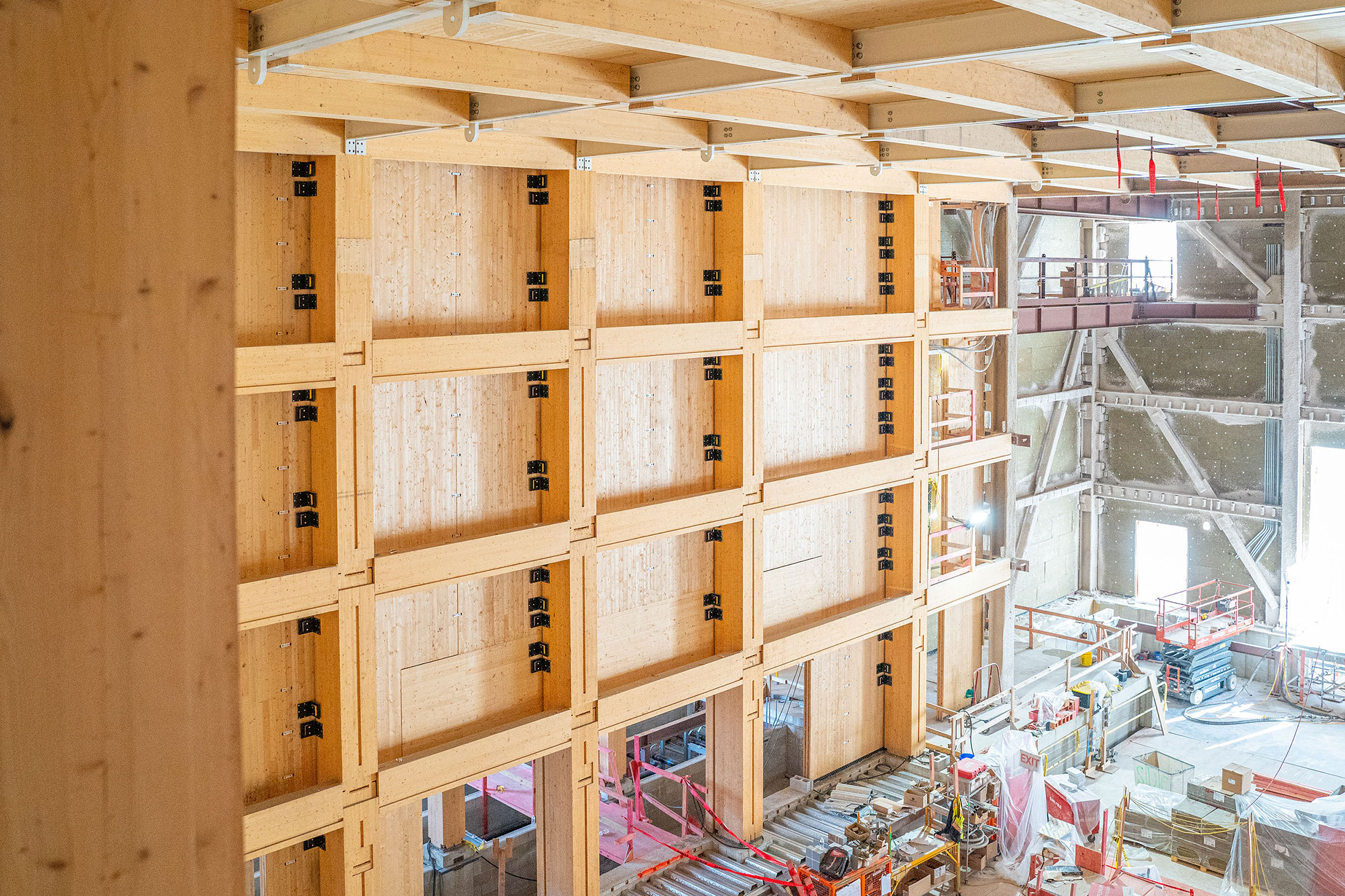
A key driver of this commitment is the use of low-carbon, responsibly sourced materials. The building is constructed with laminate mass timber, reclaimed brick, and cedar cladding to minimize its lifetime carbon budget. More than 2,000 individual mass timber components have been installed, including columns, beams, floors, walls, stairways, and elevator shafts. Among the highlights are 15 mega trusses—each 70 feet long, 10 feet high, and weighing nearly 30,000 pounds—delivered as single pieces from Canada. The structure also includes large columns weighing more than 10,000 pounds each.
The building’s chilled water, hot water, and electric utilities will be supplied by Harvard’s new lower-carbon District Energy Facility. Additional clean energy will be generated by rooftop solar panels, while natural ventilation will reduce energy use and enhance occupant comfort. A green roof and extensive plantings will aid stormwater attenuation, increase biodiversity, and promote occupant wellbeing.
The A.R.T.’s new home has been conceived and will be programmed to center community. Construction of the David E. and Stacey L. Goel Center for Creativity & Performance will continue into 2026, and A.R.T. plans to welcome audiences in early 2027.
“I am filled with deep gratitude for the extraordinary dedication, creativity, and collaboration that have brought us to this milestone. Each project partner and advisor has embraced A.R.T.’s commitment to regenerative design, going beyond sustainability to create a space that actively gives back to our community and environment. It’s so inspiring to see our vision literally take shape with last week’s installation of the final piece of mass timber. The Goel Center for Creativity & Performance will be more than A.R.T.’s new home. It will stand as a thriving example of how performance spaces can nurture both people and the planet for generations to come.”