The Biorock Pavilion at the Venice Biennale 2025
Inspired by nature, the Biorock Pavilion is a zero-carbon building where form follows abundance
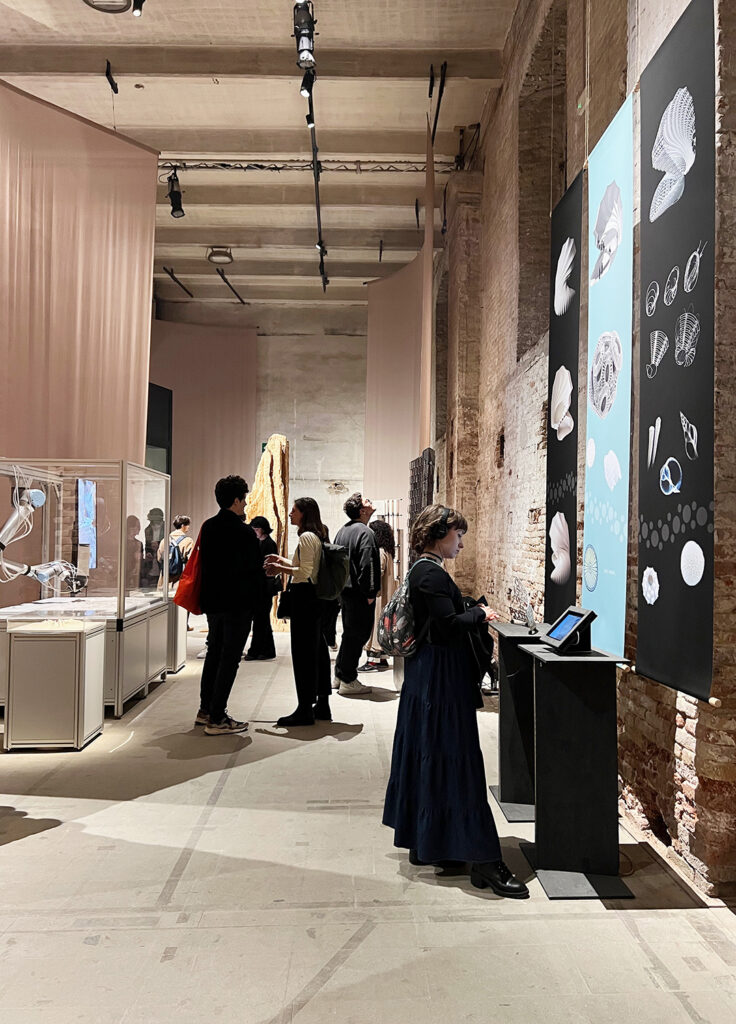
We are pleased to announce that the Biorock Pavilion is now on display as part of Matter Makes Sense at the 19th International Architecture Exhibition of La Biennale di Venezia, curated by Carlo Ratti. The project is a collaboration between Exploration Architecture, Adam Holloway Architects, sustainable development consultancy Arup, with Charcoalblue as theatre consultants.
The Biorock Pavilion is a biomimetic proposal to grow a building in seawater through the electro-deposition of minerals onto a lightweight steel frame. To flourish in a regenerative world our economic systems and built environments must see nature as integral rather than external. Biomimicry involves learning to design as nature and provides a philosophically robust and practical way to address one of humanity’s biggest challenges – the integration of everything we do as humans into the web of life.
There are very few examples of architecture that has been grown in a way that is truly comparable to biological processes. Pioneers of Biorock technology in the 1970s were architect Wolf Hilbertz and marine biologist Thomas J. Goreau. An electrical current, low enough to be safe for marine life, is passed through a steel frame submerged in seawater resulting in minerals being deposited onto its surfaces. This technique has successfully created structures underwater on which coral ecosystems thrive.
Following the process of accretion, the Biorock Pavilion will be transported to an urban location, where it will serve as a dramatic and unique venue for talks, debates and performance.
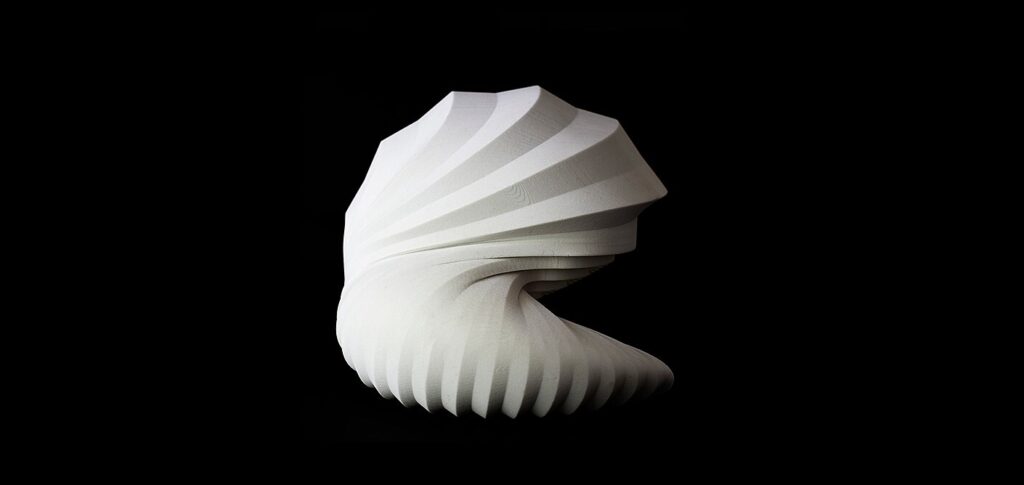
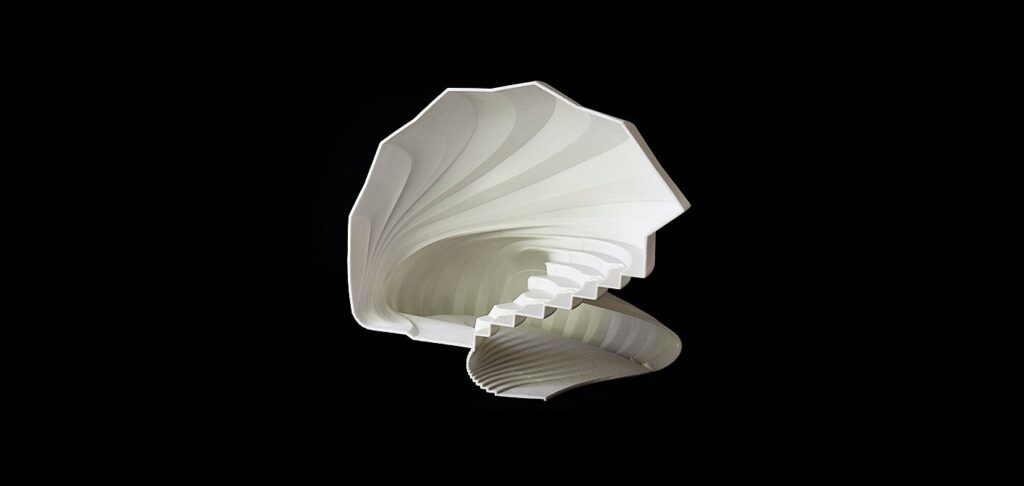
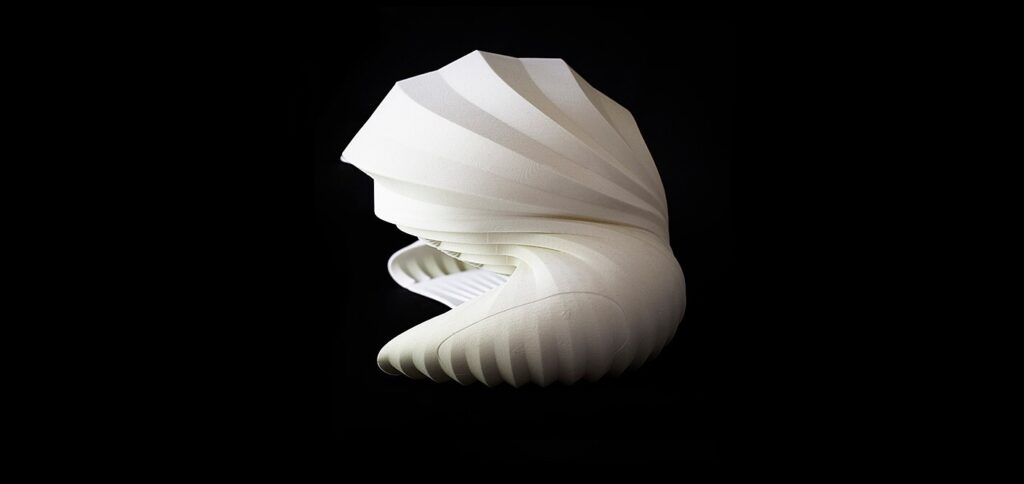
A prototype has already been grown in lab conditions to demonstrate the feasibility of the idea. During the design process, the basic elements of a stage and raked seating were explored through computational modelling. Inspired by the curves and folds of ribbed seashells, which create strength with minimal material, the amphitheatre form was manipulated into an enclosed building with side entrances and a flat surface for projected images behind the stage. A further re-imagining is that the Biorock Pavilion will be the first ever example of ‘adaptive growth’ in architecture – the amount of accretion on each piece of steel will be determined by the stress in that element.
Innovative architecture often follows a trajectory initiated by an exhibition piece, followed by a temporary pavilion, then a simple permanent structure and finally a more complex building type. The Biorock Pavilion is in the early part of the second stage, having already been created as a small-scale, grown prototype. The team is now sourcing funding for the next stage.
The 19th International Architecture Exhibition, titled Intelligens. Natural. Artificial. Collective., curated by Carlo Ratti and organised by La Biennale di Venezia, is open to the public from Saturday May 10 to Sunday November 23, 2025, at the Giardini, the Arsenale and at the Forte Marghera.